
There’s something incredibly comforting about a warm bowl on a chilly day, and this Japanese Beef Curry Udon Soup Recipe hits all the cozy notes. Thick curry broth, tender beef, and those chewy udon noodles create a perfect harmony you’ll find yourself craving again and again.

Jump to:
Why You'll Love This Recipe
Honestly, I’m always excited when I get to make Japanese Beef Curry Udon Soup because it’s such an effortless way to impress. This dish balances rich curry flavor with soft noodles and melt-in-your-mouth beef — all in one bowl. It’s perfect for a filling weeknight meal or when you want something special without fuss.
- Hearty and comforting: The broth is thick and flavorful, making every spoonful super satisfying.
- Quick to prepare: Using frozen udon and curry roux saves time but still feels homemade.
- Customizable: You can add whatever veggies you like or swap beef for chicken if you prefer.
- Instagram-worthy presentation: The glossy noodles, tender beef, and vibrant garnishes make it a feast for the eyes too!
Ingredients & Why They Work
Each ingredient in this Japanese Beef Curry Udon Soup Recipe plays a vital role to build layers of flavor and texture. The curry roux provides a rich, savory base; the thinly sliced beef cooks quickly and stays tender; and the udon noodles soak up all those incredible flavors while staying delightfully chewy.

- Thinly shaved steak: I use US Wagyu chuck roll because it’s tender and cooks faster than thick-cut beef.
- Premium frozen udon noodles: Look for fresh or frozen udon to get that bouncy, thick noodle experience.
- Japanese curry roux base: Golden Curry is my go-to—it melts smoothly and strikes a perfect balance between sweet and spice.
- Yellow or white onion: Adds gentle sweetness and depth when sautéed before the broth.
- Carrots: I usually use baby carrots cut lengthwise for quicker cooking and a nice crunch.
- Poached lotus root slices (optional): They add an appealing crunch and slight earthiness if you can get them.
- Freshly minced garlic: Provides that punchy aroma that makes the soup irresistible.
- Green onions: Thinly sliced, they bring a fresh, light bite as a garnish.
- Ketchup: Surprising but essential—it adds a subtle tang and depth to the curry flavors.
- Soy sauce: Balances savory umami and saltiness in the broth.
- Ginger paste or minced ginger (optional): Adds warmth and a gentle zing that complements the curry perfectly.
- Water: The base liquid, which the curry roux thickens into that luscious broth.
- Olive or neutral oil: For sautéing the beef and onions without overpowering the flavors.
- Toasted sesame seeds (optional): A nutty touch that I love sprinkling on top of the beef before serving.
Make It Your Way
I love adapting this Japanese Beef Curry Udon Soup Recipe depending on what I have in the kitchen. Whether it's adding more veggies for some crunch or switching the protein, there's tons of room to make this dish your own.
- Variation: Sometimes I swap the beef for thinly sliced chicken thighs or tofu for a vegetarian twist, and it still turns out satisfying and rich.
- Add more veggies: Feel free to toss in mushrooms, bok choy, or bell peppers if you want more color and nutrition.
- Spice it up: If you like heat, a little chili oil or shichimi togarashi sprinkled on top takes it to the next level.
Step-by-Step: How I Make Japanese Beef Curry Udon Soup Recipe

Step 1: Prep and cook the noodles
Start by bringing a medium pot of water to a boil for your udon noodles. You'll want to cook them just before you finish the soup since frozen udon only needs about 1-2 minutes to heat through. Once ready, drain and place the noodles directly into your serving bowls to warm them up. This prevents the noodles from sticking later on and keeps everything hot when serving.
Step 2: Cook the beef
Heat a generous swirl of oil over medium-high heat in your large pot or pan. Once it’s hot, add the thinly sliced steak. Cook it fast and keep stirring to avoid overcooking, about 2 minutes until it’s just done. Remove the beef to a plate and season lightly with salt. Cover with foil to retain warmth while you finish the soup.
Step 3: Build the curry broth
Reduce your heat to medium and add a bit more oil if the pot looks dry. Toss in diced onions and cook, stirring occasionally, until soft and translucent — about 4 minutes. Add the lotus root slices if using, and cook everything together for another 1-3 minutes. When the onions smell sweet and tender, stir in freshly minced garlic and cook for another minute until fragrant.
Step 4: Simmer veggies and dissolve curry
Pour in 4 ½ cups of water and bring the mixture to a gentle simmer. As it heats, add carrots, ketchup, ginger paste (if using), and soy sauce. Chop your Japanese curry roux block into small chunks. To get a smooth curry base without lumps, I always push these chunks through a fine mesh strainer into the pot, stirring until fully dissolved. Trust me, this step makes a huge difference!
Step 5: Assemble the bowls
With your soup ready and silky smooth, ladle it over the noodles in each bowl. To evenly share all the veggies, I like to scoop some out first before pouring the broth. Then top each serving with that beautifully cooked beef. For an extra touch, sprinkle toasted sesame seeds and green onions over the top for fresh color and nutty crunch.
Top Tip
Making a great Japanese Beef Curry Udon Soup Recipe is all about balancing flavors and textures. Over the years, I’ve learned a few hacks that make this soup really sing and will help you avoid common blunders.
- Don’t overcook the beef: Thin slices cook quickly—seal the heat fast and remove immediately to keep the meat tender.
- Use the fine mesh strainer for curry: This little trick prevents pesky chunks of roux in your soup, giving you that smooth restaurant-quality broth.
- Choose thick, chewy udon: Fresh or frozen udon noodles will hold up best in the curry broth without getting mushy.
- Don’t skip garnishes: Green onions and toasted sesame seeds bring freshness and texture that elevate the whole bowl.
How to Serve Japanese Beef Curry Udon Soup Recipe

Garnishes
I always finish mine with sliced green onions because they add a bright, fresh kick that balances the rich curry. Toasted sesame seeds are my secret weapon for a subtle nutty crunch—don’t skip them. Sometimes a drizzle of chili oil gives a perfect little heat punch.
Side Dishes
Simple sides work best here—think a crisp cucumber salad or pickled vegetables to cut through the richness. For a heartier meal, I enjoy serving steamed edamame or a light seaweed salad on the side.
Creative Ways to Present
For special occasions, I like serving the soup in warmed ceramic bowls to keep everything cozy longer. Adding a decorative leaf of shiso or a small nori strip perched on the rim adds a lovely visual touch that makes dinner feel like an event.
Make Ahead and Storage
Storing Leftovers
I store leftovers in airtight containers in the fridge. I usually keep the soup separate from the noodles if possible—udon tends to soak up too much broth if left together, so reheating tastes fresher when split.
Freezing
While you can freeze the curry soup base, I don’t recommend freezing the udon noodles as they can lose their texture. Freeze the soup in portions, and when ready, thaw and add freshly cooked or warmed noodles for the best experience.
Reheating
Heat the curry soup gently on the stove; avoid boiling to protect the flavors. Warm your noodles separately in hot water for a minute, then assemble fresh bowls to enjoy that chewy texture and vibrant taste.
Frequently Asked Questions:
Udon is ideal because of its thick, chewy texture that holds up well to curry. However, if you can’t find udon, thick ramen or soba noodles can work in a pinch, though the experience will be a bit different.
Ketchup adds a subtle tang and slight sweetness that helps balance the rich and savory flavors of the curry. It’s a secret ingredient that gives the broth more complexity.
Absolutely! Lotus root adds a crunchy texture and some earthiness, but it’s optional. The soup still tastes fantastic without it, especially if you aren’t able to find it.
Leftovers will keep well for up to 3 days in the refrigerator. Be sure to store the noodles separate from the soup if possible, and reheat gently to preserve texture.
Final Thoughts
Japanese Beef Curry Udon Soup Recipe has been one of my go-to comfort meals for years, especially when I want something cozy but impressive. I love how quickly it comes together without sacrificing any of those rich, soothing flavors. I’m confident you’ll find it just as rewarding to make and enjoy—it’s the kind of dish that feels like a warm hug in a bowl, every single time.
Print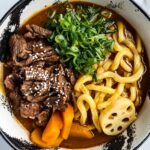
Japanese Beef Curry Udon Soup Recipe
- Prep Time: 20 minutes
- Cook Time: 30 minutes
- Total Time: 50 minutes
- Yield: 2 servings
- Category: Main Course
- Method: Stovetop
- Cuisine: Japanese
Description
A hearty and flavorful Japanese Beef Curry Udon featuring tender thinly shaved steak, chewy premium udon noodles, and a rich curry broth full of vegetables like carrots, onion, and optional lotus root slices. This comforting dish combines the savory depth of Japanese curry roux with fresh aromatics and a delicious topping of green onions and toasted sesame seeds.
Ingredients
Meat
- 8 to 10 oz thinly shaved steak (US wagyu chuck roll recommended)
Noodles
- 2 packs (250 g each) premium frozen udon noodles
Vegetables and Aromatics
- 1 medium yellow or white onion, diced
- 8 oz carrots, chopped into bite-sized pieces (baby carrots halved lengthwise)
- 8 oz poached lotus root slices, halved (optional)
- 1 tablespoon freshly minced garlic
- 4 green onions, greens sliced thin
- 1 tablespoon ginger paste or freshly minced ginger (optional)
Liquids and Seasonings
- ~3.5 oz Japanese curry roux base (Golden Curry brand, 1 small package or half a large package)
- 2 tablespoon ketchup
- 2 tablespoon soy sauce
- 4 ½ cups water
- Olive oil or neutral oil (for cooking)
- Toasted sesame seeds (optional, for topping the steak)
Instructions
- Prepare the Udon Noodles: Bring a medium pot of water to a boil. When the other ingredients are nearly ready, add the frozen udon noodles and cook for 2 minutes to warm through. Drain and place noodles directly into serving bowls.
- Cook the Steak: Heat a generous swirl of olive oil in a large pot over medium-high heat. Add the thinly sliced steak and stir frequently until cooked through, about 2 minutes. Remove the beef to a plate, season lightly with salt, and cover with foil to keep warm.
- Sauté Vegetables: Reduce heat to medium and add more oil if needed. Add diced onion and cook, stirring occasionally, for about 4 minutes until soft. Add the lotus root slices, if using, and cook together for another 1-3 minutes until onions are translucent.
- Aromatize: Add minced garlic to the pot and cook for about 1 minute until fragrant.
- Simmer Broth: Add 4 ½ cups of water to the pot and bring to a simmer.
- Add Flavorings and Veggies: As the broth simmers, add chopped carrots, ketchup, ginger (if using), and soy sauce. Chop the curry roux into small pieces and dissolve it into the simmering broth by pressing it through a fine mesh strainer to avoid lumps.
- Assemble the Dish: Pour the completed curry broth with vegetables over the udon noodles in serving bowls. You may scoop out and evenly distribute the vegetables.
- Garnish and Serve: Top each bowl with the cooked beef and garnish with toasted sesame seeds and sliced green onions. Serve immediately.
Notes
- Use premium frozen udon for best chewy texture; fresh udon can be substituted if available.
- Poached lotus root is optional but adds a nice crunchy texture and authenticity.
- Pressing the curry roux through a fine mesh strainer helps prevent lumps in the soup.
- Adjust seasoning with soy sauce or ketchup to taste depending on preferred sweetness and saltiness.
- Thinly sliced wagyu or chuck roll steak cooks quickly and adds rich flavor; substitute with any thinly sliced beef if unavailable.
Nutrition
- Serving Size: 0.25 batch
- Calories: 420 kcal
- Sugar: 8 g
- Sodium: 850 mg
- Fat: 18 g
- Saturated Fat: 6 g
- Unsaturated Fat: 10 g
- Trans Fat: 0 g
- Carbohydrates: 45 g
- Fiber: 4 g
- Protein: 22 g
- Cholesterol: 50 mg




Leave a Reply